Friday, February 7, 2014

AP Lit: Literary 3x3s: James Joyce & Dubliners

Here's the work we've been doing with Literary 3x3s & Joyce's Dubliners.

We only read four of the stories:

  • "Araby"
  • "Eveline"
  • "The Boarding House"
  • "The Dead"
The selection was chosen because of common threads running across those particular texts, relative ease of reading and lack of background knowledge required to understand even the nuances, and because they represent something of a life arc, beginning with childhood in "Araby," late adolescence in "Eveline," early adulthood in "The Boarding House," and mature adulthood and old age in "The Dead."

After creating literary 3x3s for each of the stories, we put them on index cards to build Joyce decks.  (We used letters in the corners of each to indicate which cards belong to which story.)

We did a variety of activities with them including:

  • Finding common threads across the four stories by "tapping" (a la Magic: The Gathering) related cards.
  • Shuffling the deck, laying out nine cards, and trying to determine which story emerges from the deal.
  • Swapping decks and trying to determine the original creators' intended 3x3s layouts.
  • Partners dealing out nine cards each and finding common threads across two different decks.
We will be keeping these decks and coming back to them using other author's works as we try to identify common threads across the other literature we read this year.

Here are some pics of the work we've done.


AP Lit 2B/3B: Joycean 3x3s & Frankliners

We start with MUGS Apostrophes 3 Quiz.

And from there . . .

We pull out our 3x3 decks from Joyce's Dubliners stories.  (If you weren't here the other day, you need to finish building yours.)

We will experiment a bit with those decks as we try to uncover common threads and big thinking across the four stories.

Then we deep dive in Joyce's actual language, uncovering evidence of his style in across these four stories.

  • Fusion of Fiction w Reality
    • Real places, real buildings, even real people appear amongst the fiction
  • Epiphany
    • awakening/understanding
    • appeals to all 5 senses
  • Free Indirect Discourse 
    • a particular style of stream of consciousness
    • fluid movement between narrator and character
  • Manipulation of Language and Aesthetics
    • experiments with word play, structure, linguistics, genre
All of this in the service of writing brilliant "Frankliners" short stories and narrative poetry.

What am I talking about?  THIS!  


HOMEWORK

Blog: 3+ Posts
Req'd Post: Create a visual 3x3 of the town (or county) where you live.  What does that place mean to you?  How can you capture your relationship with your town through pictures?  Consider taking or drawing/painting your own.  Give considerable thought to how you arrange them.

MUGS: Apostrophes 3 on NoRedInk.com
Quiz: Thursday/Friday Feb 6 & 7


Read & Annotate: How to Read Lit Like a Professor "Geography Matters . . ."
Post: Annotations on the blog

Heads Up: Frankenstein is next!  Will need to be read by Thursday AFTER Feb break.  Let me know if you need a hard copy.  Many, many, many places to get it free online including here.

Thursday, February 6, 2014

Humanities: RAFT: Redesigning Orientation at Merryweather High

You teach at Melinda Sordino's Merryweather High.  

The administration has said, "We need to do a better job with orientation and creating a welcoming culture for our students" and has asked you to be part of that task force. 

Design an orientation experience that would help all students, including introverts and "outsiders," feel safe and welcome at Merryweather High and be prepared to explain to the administration the reasoning behind your design.

These resources are here to help. Make sure you credit your sources of inspiration.  

School Climate

Supportive School Environment

Creating an Inclusive School

Transition Ideas and Programs

Orientation Activities

Positive School Environment

Tips for Incoming Freshmen

Freshmen Orientation Video Sample
http://m.youtube.com/watch?v=xgoHrPb5ct8

HOMEWORK
Blog: 3+ Posts
Req'd Posts:
2 Req'd Post for the Week
1) Give yourself grades for the first semester, similar to how Melinda grades herself.  Notice that she grades herself in things that aren't just academic classes. After grading yourself, include the reasons behind your grades.  Be specific and clear.

2) Brainstorm the video/transition experience for the incoming ninth graders in April.  List every idea of what that video could be, what the activities could look like, or what else could happen next fall.

Need ideas for more blog posts?  Check out the tag "Blogger Fodder" and the videos/links that have been posted.

Read: Complete the "First Ranking Period" (pg 46)
Due: Thursday, Feb 6

Roots: Roots 9 Product & Quiz
Roots Quiz 9 (6, 7, 8, 9) & Product Due: Thursday, Feb 6

PACE: Macbeth & Conflict

Today we'll be looking at internal and external conflict, as well as digging deeper into the resources you have for understanding Macbeth.

We will also continue to unpack our standards, focusing on listening & speaking, writing and reading.

We finished unpacking the listening standard today.  This should help us move through the others more quickly next week.

As you work on your three graphic organizers for Macbeth, choose from these ten scenes.

  1. 1.3 (3 lines) KEY
  2. 1.5 (important - Lady mcbeth)
  3. 1.7 (important)
  4. 2.1 (important)
  5. 3.4 (important)
  6. 4.1 (important)
  7. 4.3 (2) (important)
  8. 5.1 (out damn spot) Imporatn)
  9. 5.5 (out out brief candle)
  10. 5.8 (death and new king)
You may want to use the Shakespeare Navigators site to help you understand.

We'll get some help from Ms. Campbell today to help us better understand internal & external conflict.

Conflict

Conflict

Internal- Conflict going on inside of a character; a character versus him or herself.

1. Man vs. Self
  • "The" internal conflict
  • Character versus him/herself
  • A choice between two paths
  • Classic: Requiem For A Dream

External- Conflict between a character and an outside entity.
1. Man vs. Man (to be PC, "Person vs. Person")
  • Conflict between two people
  • Classic: Dorothy vs. Wicked Witch in Wizard of Oz, Any Hero vs Any Villain (ever)

2. Man vs. God/Supernatural/Fate
  • Fighting fate/destiny/one's path
  • Classic: The Shining, Macbeth (the witches!), Dracula

3. Man vs. Nature
  • Character versus the elements
  • Classic: Old Man and the Sea, Robinson Crusoe... Castaway...

4. Man vs. Society
  • Character is "against the world" (or at least a group of people)
  • Classic: Charlotte's Web

HOMEWORK
Blog: 3+ Posts
Req'd Post: You work for a major multimedia corporation that has just decided to make a series of films, TV shows, video games and books based on Shakespeare's plays because they are royalty-free.  The board of directors hired you to generate some ideas around Macbeth.  Unfortunately, you've never read the whole play or even seen the whole film. Using any line or phrase from Macbeth as your inspiration and the title, and what little you know about the play, pitch one idea to the board of directors for a film, TV series, video game, or book.
Due: Friday, Feb 8

Macbeth Graphic Organizers: Must Complete 3
Teacher Pace Due Dates:
Wed: Feb 12
Tue: Feb 25
Wed: Mar 5

Want different dates? Go to the Due Dates Form. 

MUGS: Commonly Confused Words #2
Quiz: Friday, Feb 14

Start Thinking & Planning: Movie/Video Game/TV Show Pitches & Bibles
Due: Early March

Wednesday, February 5, 2014

PACE: Macbeth Graphic Organizer Tutorial

Humanities: Insights & "How Might We" Improve MS to HS Transition & Speak

Tuesday, we started with a quick round or two of knockout to prep for our Roots 9 quiz on Thursday.  Remember there is also a Word Map or Roots Product due as well.

Then we divided into two groups to work on our 8th to 9th grade transition design challenge.

One group worked with Mr. Ryder on capturing insights from our "first day at school" writings and seeing how those insights will affect our designs.


One group work with Mr. Dunbar on "How might we" improve the transition from 8th to 9th grade.  They focused on who should be interviewed and what questions should be asked.

After debriefing this work, some folks went and read Speak on their own, while others worked with Mr. Ryder.


HOMEWORK
Blog: 3+ Posts
Req'd Posts:
2 Req'd Post for the Week
1) Give yourself grades for the first semester, similar to how Melinda grades herself.  Notice that she grades herself in things that aren't just academic classes. After grading yourself, include the reasons behind your grades.  Be specific and clear.

2) Brainstorm the video/transition experience for the incoming ninth graders in April.  List every idea of what that video could be, what the activities could look like, or what else could happen next fall.

Need ideas for more blog posts?  Check out the tag "Blogger Fodder" and the videos/links that have been posted.

Read: Complete the "First Ranking Period" (pg 46)
Due: Thursday, Feb 6

Roots: Roots 9 Product & Quiz
Roots Quiz 9 (6, 7, 8, 9) & Product Due: Thursday, Feb 6


Blogger Fodder: What It Means to Be Human

David Byrne is a rad, rad dude.  Back in the late 70s and then into the 80s and 90s he was part of the seminal art-punk-new-wave group, Talking Heads.


And then later he did a ton of other cool stuff.

He got kind of obsessed with PowerPoint for a while, seeing it as a way to create powerful art if only it was used to do so.  He really hates slideshows.  Here he talks about technology.

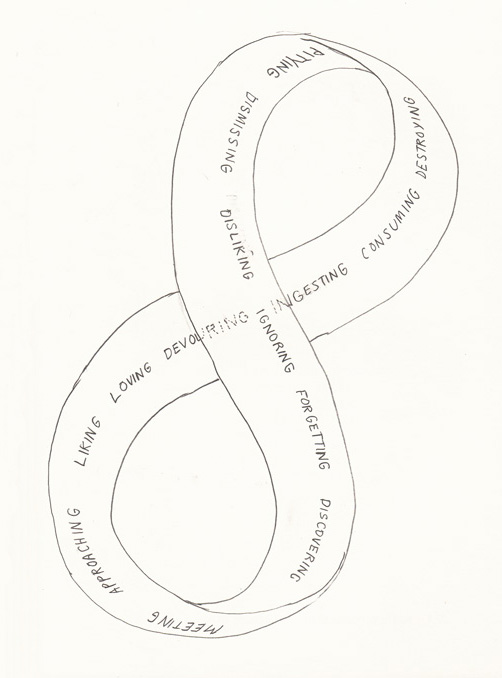
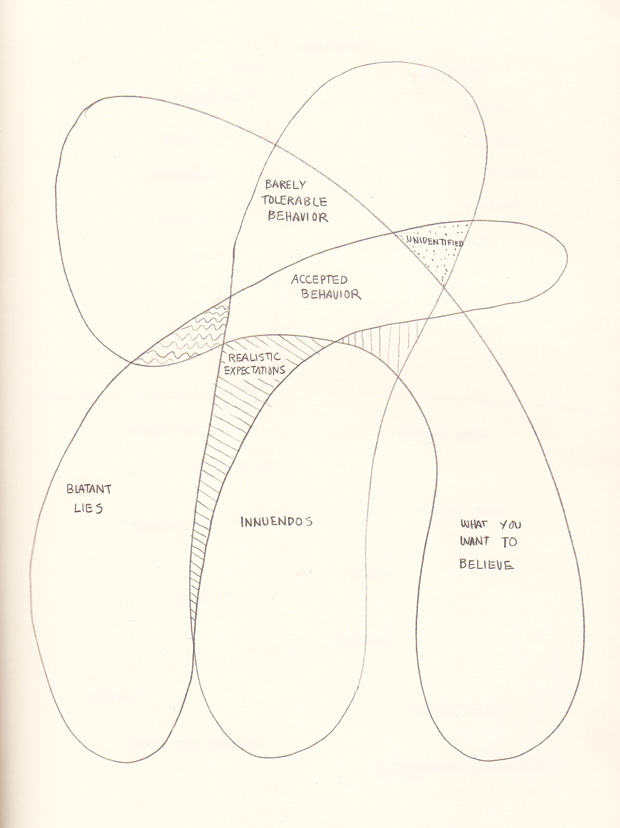
But this came across my Twitter feed and got me thinking a lot about visual note taking and our relationships with our stuff and others around us and . . . well . . what do you think?

Link with lots more here: http://www.brainpickings.org/index.php/2013/01/18/david-byrne-arboretum/?utm_content=buffer988b1&utm_medium=social&utm_source=twitter.com&utm_campaign=buffer