Today we will split the class in two, something that will happen more and more in Humanities.
Artifacts
Mr. Dunbar will work with folks on their personal artifacts, uncovering understandings about one another.
Design
Mr. Ryder will work with folks on designing Room F-215, plotting ideas on a chart, examining models, making physical changes to the room, and planning on how to make others next week. And then the groups will switch.
Homework
Complete: Artifact work if not yet complete.
Gather: Resources we need to finish the room design.
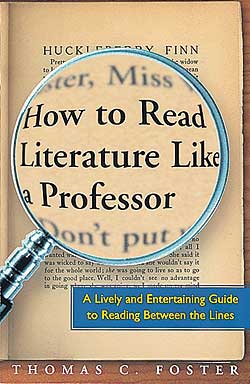
Today we talk about the introduction Foster's How to Read Literature Like a Professor. We'll share our insights & understandings and how Gibson's ideas connect to our past experiences.
Design
We will also post our design models of the classroom and plot our thinking on what changes should be made and how we can get those changes to happen.
Community
We will take time to discuss our norms as a class, the habits of culture in the room that each of us really need to be successful. For example, I need a space where it's okay to be raggedy -- to express half-ideas, not quite formed thoughts, almost there notions, and to then be able to say, "You know what? I wasn't quite on with that." What are your particular needs?
Producing & Sharing
But we'll start the day with another round of sharing our summer projects. Four more folks will share their thinking, ideas, and products.
Homework
Read:Ender's Game (1-100) Prepare to Discuss: To what extent does EG qualify as "Literature?" Read: "Thinking About Literature" packet Complete: One of the activities based on the poetry & short stories embedded in the packet. This is another benchmarking piece for me. I'm looking to see what you choose, the quality of the work you produce.
How can what we say affect how other people think about us?
What can we learn from our responses to another’s painful experiences?
What effect can our jokes have on the people around us?
Artifacts & Humanities
From there we will turn our attention to artifact thinking & critical thinking, digging deep, going beyond the surface as we try to determine what Humanities is all about through evidence.
Yesterday's artifact work was pretty good. We can do even better.
Design
After the artifact work, we return to designing the classroom where we will be using a 2x2 plotting system to help us whittle down all the room design ideas we have going to those we should probably actually put to work in our space.
And then . . . we can start moving stuff around.
Homework
Due Thursday 9/5
Gather artifacts that represent you based on these criteria. a. One artifact should be about you as a student. b. One artifact should be about you socially (family/friends) c. One artifact should be about your personal interests/hobbies. d. The last artifact is completely up to you. On the sheet provided, write a few sentences about what each artifact says about you. Put all of the artifacts in the brown paper bag given you along with the rationales. Put your name ONLY ON THE SHEET. Identity Cultural Anthropology Experience: We will place the artifacts that each of you have brought in paper bags. Your job/and my job will be to get one bag, put the items on your desk, take a look at them, and then circulate around the room. Make your best guess as to who belongs to each set of artifacts and why you think that.
Wednesday's class is going to make some tremendous headway for our classroom design.
Design
We will start with Thirty Circles again to warm up the brains. Then we will interview one another using the Four Compass Points protocol, a way of asking key questions about a problem you are trying to solve and finding out what your partner thinks about that problem.
From there, you can choose the design work that most appeals to you: Organizing & coding the input from the various sources Drawing/constructing models of the classroom based on the data available Prototyping and physically experimenting with configurations in the classroom The above will take about 45 to 50 minutes.
What Is PACE?
The rest of class will be a discussion of what PACE is, what it means, what is going to happen this year, and what each of us needs for this to be successful. This will mean "norms" work a.k.a. "how we roll" work.
Homework
We will be working a great deal with symbolism, metaphor and analogy this year. Bring three objects with you to class: One represents yourself as a learner One represents what you are thinking about PACE right now One represents what you hope to gain from PACE Be prepared to discuss, defend, praise your choices.
We are going to continue shaping our room into a premiere thinking and learning space today.
Designing
We'll start with another round of Thirty Circles to get the brains flowing.
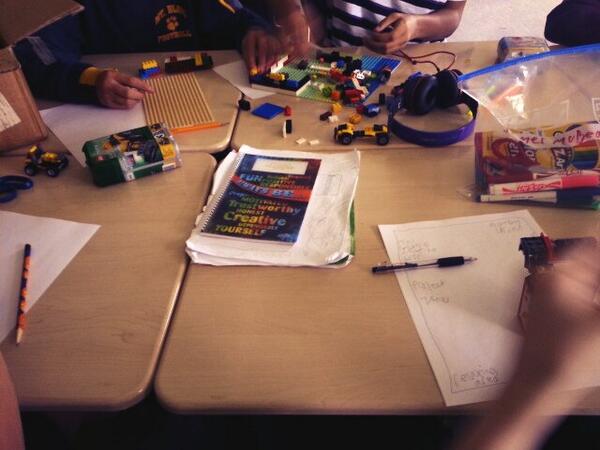
From there, we will draw maps and construct Lego models of our new space. These maps will go up on the wall and will help determine the best ideas for our space.
Cultural Anthropology
This leads us to the MakeSpace where we will be working with cultural artifacts and practicing our cultural anthropology skills. Four tables will feature a number of artifacts. Using your observation, inference and deduction skills to make hypothesis about who you believe owns each of those artifacts, Mr. Ryder or Mr. Dunbar.
Homework
Due Thursday 9/5
Gather artifacts that represent you based on these criteria. a. One artifact should be about you as a student. b. One artifact should be about you socially (family/friends) c. One artifact should be about your personal interests/hobbies. d. The last artifact is completely up to you. On the sheet provided, write a few sentences about what each artifact says about you. Put all of the artifacts in the brown paper bag given you along with the rationales. Put your name ONLY ON THE SHEET. Identity Cultural Anthropology Experience: We will place the artifacts that each of you have brought in paper bags. Your job/and my job will be to get one bag, put the items on your desk, take a look at them, and then circulate around the room. Make your best guess as to who belongs to each set of artifacts and why you think that.
A tremendous amount to accomplish in a very short amount of time, these first two classes of the week. Essential Question: Why Study Literature? Sub EQ's:
How do we define literature?
How do we study literature?
How can our space help us to better understand literature?
I will hand you a selection from How to Read Like a Professor that you are to close read and be prepared to apply and discuss next class.
Design
We'll start with the continuance of our design project by completing the Four Compass Points interview process. During the interview, you will learn about your fellow classmates and what needs they have for this space as a place to study and understand literature, as well as problem solve, collaborate, and enjoy themselves. This interview, along with your other observations and the ideas upon the walls, will inform the design work you will complete for homework: a diagram/model of the room as you believe it would best function.
Guidelines & Expectations
From here we will take some time to discuss the course guidelines & expectations. You receive so much of this material in the first week of school, I prefer to save it for the second.
Preview of Our Guidelines & Expectation
During this session we'll also talk about class norms: the behaviors and understandings we each need from one another in order to function well as a problem solving team. I like to think of it as "How We Roll . . ."
Sharing Projects
Another round of summer project sharing. I'll be asking folks to get ready for this during our Guidelines & Expectations conversation. We can multitask like that, right?
Uniting Great Expectations & Empire Falls
I've begun assessing summer essays and I thought it might be helpful to the revision process if we explored some of the connections between these two works.
Ender's Game
Today I assign the first one hundred pages of Ender's Game to be read for the first class of next week. We'll sign those out of the library to end class today. This title is going to be our chief point of discourse around our essential question.
H/W
Read: Ender's Game page 1-100 - Due 1st Class of Next Week (9th/10th) Close Read: Intro to How to Read Like a Professor - Due Next Class (5th/6th) Close Reading includes annotations: what you notice, questions you have, connections you can make Design: Map/Visual of the classroom as you believe it would best suit the classes' needs - Due Next Class (5th/6th)
To post as a Google Doc after writing in Pages, simply cut and paste your work into a new Google Doc and share with me on Drive in your [Student Name] AP Lit IN Folder you will be creating on Drive