Showing posts with label Fiction. Show all posts

Tuesday, October 15, 2013

AP Lit 2B/3B: Remxiing J. Alfred & Preparing for a Party

We have a couple of housekeeping items & then we've got plenty of work to do.

Revisions.

As you complete revisions, remember to also complete a "Revision Submission Form."  This helps me track your work as well as better ensure I take note of all the work you've done. This form is in the "AP Lit 2013 OUT" folder.  (I might end up putting a link to it over in the right sidebar as well.  We'll see.  I don't want to clutter that space up.  Though to emphasize revision. . . )

Blogging.

This week's required post isn't creative.  Instead it's analytical.  (I'll make it up to you next week with a doozy.)  

"The Love Song of J. Alfred Prufrock"

We'll start with Ellie Goulding.  Naturally.


And follow that with a little DJ Earworm.


Which takes us to a discussion of remix/mashup culture and the argument that T.S. Eliot, brilliant literary mind, has really crafted himself quite a magnificent remix/mashup of many styles, voices, points of view and created a thing quite worthy of its own accord -- but impossible to have crafted without its predecessors.

We'll take large print outs of the poem and slice that thing apart, taking trophies of poignant language and harvesting keepsakes of gorgeous thoughts.  We want to find those elements of the poem that best signify its essence -- without them, the poem would cease to be -- as well as the recognizable moments, the access points, the hooks.  (Anyone else remember Akon? All that dude did was sing the hook.  We need to find Eliot's Akon moments.  And file that under "Things never said by an AP Lit teacher -- ever.")

And then we will pause and return.  This is but day one.  We will come back to Eliot & J. Alfred next week with fresh readings and fresh perspective.

Dallowinian Party

The Party is upon us.  We must make certain everyone knows his/her roles, relationships between each character, the schedule for that day, and familiarity with the stream of consciousness writing form being employed, as well as the character preparation form. You'll be handwriting to capture the primacy of the moment -- and then transcribing to your computer for documentation & discussion purposes.

We also need to come up with a list of interruptions that will add context & plot to the party.

Homework

Prepare:
Dallowinian Party
Character Preparation Form
Due: Thursday, 10/17

Revise:
Synthesis & College Essays
Revision Submission Form
Due: Last day to submit revisions 10/25

Blogging:
 3+ Posts
Due: Friday, 10/18

Analytical Post: Since we have such a creative endeavor ahead of this week in class, the assigned blog post will be analytical in nature.  However, one may want to use creative means of uncovering meaning between these two texts. (Taking pics can be a great way to share non-tech work on your blogs.)
Choose one of the several items of criticism at the link provided.  Choose one that captures an interesting angle, reflects or refutes your thinking, opens your eyes or otherwise engages your thinking.  These are not easy reads, some more challenging than others. Be unafraid to dig further, to research allusions.  Document your process (this may be more than a single blogpost's worth of work) and then post your thoughts in relation to the critic's.  Q: To what extent to you concur with the critic's assertions?
EQ: To what extent can amateurs demonstrate the quality of thought presented by experts?

Read & Create:
Indie Book Project
Due: First week of 2nd Quarter

Tuesday, October 8, 2013

AP Lit 2B/3B: Mrs. Dalloway, The Hours & the Party

Today we have three major goals/outcomes:


  1. To better identify Woolf's techniques and styl
  2. To identify how Cunningham's techniques and style reflect(s) Woolf's
  3. To establish our setting and archetypes for the Dallowinian Party


And laugh.  It would be helpful today to laugh.  We'll see if that happens though . . . 

We'll start with some photocopies -- shudder -- of passages from Mrs. Dalloway and The Hours, passages I think particularly well suited to finding connections between Woolf & Cunningham.  We'll do some small group close readings w/ a particular focus on:

* stream of consciousness
* symbolism/motif
* diction
* imagery

(Yup. They are all from Wikipedia.  Except for imagery -- which isn't particularly descriptive -- these are pretty solid entries.  More examples for "motif" would be nice.  Hoping to find other resources for us.)

You'll be using your design kits and annotation skills to make these connections. 

From there, we have to get very serious about our Dallowinian party.  We'll work together to choose a setting -- time period, physical location -- and then establish the archetypes we've seen emerge from these two texts.   If possible we'll cast today.  We'll go over the character preparation forms that need to be completed for next Tuesday.    If we don't cast today, we'll cast on Thursday and that will inform what you need to include in your preparations.

Homework

Blogs: 3+ Posts for the Week
Creative Blog Entry: Choose a supporting character from Mrs. Dalloway or The Hours, one who may not get much time or attention.  Write a paragraph of story that Woof or Cunningham left out.  It need only be a paragraph.  Do your best to emulate the style of the writer.  Then write a single paragraph of analysis explaining your approach.

Read & Listen: Tracy K. Smith's "Duende"  Annotate & consider how she employs repeated imagery, structure and diction to inform themes similar, or perhaps dissimilar, to Woolf & Cunningham.

Dallowinian Party Gathering & Planning: Make use of Google+ and Drive to plan for the party.  Keep me within your loops.

Revisions: Start the process in earnest. You have until Oct 25th to submit revisions, get feedback, and resubmit again if you so choose.


Wednesday, October 2, 2013

AP Lit 3G: College Essay Tips & Dallowinian Discussions & Ideas

We'll start class with a few general suggestions about college essays and what I think helps students write effective, meaningful, powerful and relatively succinct pieces that get the desired results.

We'll take five minutes to check out http://kaizena.com/docs as well and see how that tool can help us.

Then we return to a new Mrs. Dalloway discussion.

Last class focused on plot and then veered into technique and form.   I'd like the class to start with discussing techniques and form Woolf uses, seeking to uncover the how and the why, and then move on to the necessary what and who.  

We will have a new backchannel here for these two days of discussion between the classes.

We would do well to create a list of character types we should be considering now, even having not read The Hours yet.  Five to ten minutes at the end of class should suffice for that.

Homework:

Write: College Essay Submission draft

Due Friday 10/4

Read: The Hours (optional b/c not enough copies to req.; Mr. Ryder cannot count.)
Will be extremely valuable in understanding Mrs. Dalloway and in creating a great Dallowinian Party event.
Due Tuesday 10/8

Start Planning & Thinking: Dallowinian Party - Character
See Materials & Rubric in Google Drive OUT folder.
Updated rubric coming soon
Due Thursday 10/17

Blog
3+ Entries Including the Creative Entry of the Week
Creative Blog: For some writers, a character's attire is little more than an afterthought.   Not so, with our most recent creators.  Both Woolf and Cunningham use clothing and physical appearance to convey meaning in their respective works.

Use Polyvore, or another tool or physical materials, to create a wardrobe collage suitable for a character in either Mrs. Dalloway or The Hours.  You may try to create a historically and textually accurate collection or you may choose instead to select contemporary equivalents.  Explain your selections with regards to conveying meaning, not merely literal interpretations.

Added Challenge:  Use physical wardrobe pieces and photography to do the same.

Tuesday, October 1, 2013

AP Lit 2B/3B: Dalloway Discussion & Introducing The Party

Today marks our first formally graded class discussion.

We have a new rubric for blogging starting with this week, Q1 Week 3.

The rubric is below.


Today we also start using our discussion rubric.


Today's back channel is here.


Homework:

Write: College Essay Submission draft
Due Friday 10/4

Read: The Hours (optional b/c not enough copies to req.; Mr. Ryder cannot count.)
Will be extremely valuable in understanding Mrs. Dalloway and in creating a great Dallowinian Party event.
Due Tuesday 10/8

Start Planning & Thinking: Dallowinian Party - Character
See Materials & Rubric in Google Drive OUT folder.
Updated rubric coming soon
Due Friday 10/18

Blog
3+ Entries Including the Creative Entry of the Week
Creative Blog: For some writers, a character's attire is little more than an afterthought.   Not so, with our most recent creators.  Both Woolf and Cunningham use clothing and physical appearance to convey meaning in their respective works.

Use Polyvore, or another tool or physical materials, to create a wardrobe collage suitable for a character in either Mrs. Dalloway or The Hours.  You may try to create a historically and textually accurate collection or you may choose instead to select contemporary equivalents.  Explain your selections with regards to conveying meaning, not merely literal interpretations.

Added Challenge:  Use physical wardrobe pieces and photography to do the same.

Friday, September 20, 2013

PACE: I Am Hero Rubric, Proposal Forms, Blogs & Heroic Cycle . . . Wow. That's a lot.

We'll start class by setting up our blogs.  This will only take about 15 minutes fortunately because it is a pretty quick process.  We start blogging next week as a formal assessment. (3+ entries per week, M - F, including the creative prompt I provide you each week.)

From there, I will share with you the rubric for "I Am Hero" and some examples of projects other students have done in the past.

The rubric is right here.  (And I posted it on its own entry as well.)


We won't take a ton of time to introduce the project.  While it is a big project, you will need a little more background to really get started and do it proper justice.

We'll get that background with an online thinking activity with Padlet.


And then finally . . . two more things.  I'm telling you.  Today is a LOT.  

Week #1 Graphic Organizer.  We'll hold off on summary/paraphrase for now.  That section is optional. HOWEVER, eventually you'll be doing it so why not try researching it on your own?   What's the difference between summarizing and paraphrasing?  Perhaps there's a video out there that can help.   Or a website at least.  

Instead, you'll get into your reading groups and complete the bottom part of the I Am Hero Graphic Organizer due TODAY.  The results of your work will be linked on your blogs and and included in your organizer.  Those pieces are the creative thinking portion of the graphic organizers and worth the time they take.
While you are completing THAT work, there will be some papers circling to help us continue our work on room climate.  It will all make sense once we are doing it.

Homework  

Teacher PACE: Read novel by 9/30Student PACE: Reading group selection for next class
Start Designing: I Am Hero project


Complete - if you haven't: I Am Hero Graphic Organizer #1

Monday, September 16, 2013

AP Lit 2B/3B: Brainstorming & Synthesis Thinking & Mrs. Dalloway-ing

We start today with setting up our blogs.    Blogs -- and soon Google+ -- are going to be vital for folks to share the ideas and continue the conversations that get the short shrift in class.
Blog
We should be able to do this rather quickly and start our synthesis work which requires our handy dandy DESIGN KITS! Yay! (Seriously. I'm excited. A lot.)
Synthesis Thinking
We'll look at this post from OpenIDEO to get tips on brainstorming.

Then we'll formulate ideas for our synthesis essays by brainstorming connects between the works we have read and putting that on paper.  After the brainstorm, the workshop turns to construction as each group will build a powerful synthesis thinking thesis statement to serve as a model as you embark on your individual work.  

We will document the snot out of this work and put it here as well for continued referencing.

Synthesis essay rubric, culled from your group work, lands Thursday.  A workshop worthy draft is due that day as well.

This is also our opportunity to raise ideas from Ender's Game that we have not yet had a chance to explore.

Mrs. Dalloway
From there, we dive into Virginia Woolf's Mrs. Dalloway.  We will discuss stream of consciousness narratives and the challenges they pose both reader and creator.  There's a great article here that discusses the syntax & construction Woolf uses in her narrative.  (Click on "Download PDF" to read the whole thing.)

And we'll start the reading together as a class so we have a shared experience with the narrative.

Homework

Blog: 3+ entries (3 effective, meaningful entries = meets; exceeds = 4 OR mindblowing, uber brilliant 3)  for Friday including 1st creative prompt:

Soundtracking a Most Cinematic Moment: Each of our novels thus far has possessed certain cinematic qualities.  Choose a passage from a particularly cinematic moment, post that passage, and link/embed a song that you believe would serve as an effective soundtrack to that moment.  Added challenge? Compose your own original.

Write: Synthesis Essay: Workshop worthy draft due in class on Thursday, 9/19
Read: Mrs. Dalloway up to "T, an O, an F."

AP Lit 3G: Blogging & Synthesis Thinking & Letting the Woolf Loose

We start today with setting up our blogs.  
Blog
We should be able to do this rather quickly before lunch and start our synthesis work which requires our handy dandy DESIGN KITS! Yay! (Seriously. I'm excited. A lot.)
Synthesis Thinking
We'll look at this post from OpenIDEO to get tips on brainstorming.

Then we'll formulate ideas for our synthesis essays by brainstorming connects between the works we have read and putting that on paper.  After the brainstorm, the workshop turns to construction as each group will build a powerful synthesis thinking thesis statement to serve as a model as you embark on your individual work.  

We will document the snot out of this work and put it here as well for continued referencing.

Synthesis essay rubric, culled from your group work, lands Wednesday.  A workshop worthy draft is due that day as well.

Mrs. Dalloway
From there, we dive into Virginia Woolf's Mrs. Dalloway.  We will discuss stream of consciousness narratives and the challenges they pose both reader and creator.  There's a great article here that discusses the syntax & construction Woolf uses in her narrative.  (Click on "Download PDF" to read the whole thing.)

And we'll start the reading together as a class so we have a shared experience with the narrative.

Homework

Blog: 3+ entries (3 effective, meaningful entries = meets; exceeds = 4 OR mindblowing, uber brilliant 3)  for Friday including 1st creative prompt:

Soundtracking a Most Cinematic Moment: Each of our novels thus far has possessed certain cinematic qualities.  Choose a passage from a particularly cinematic moment, post that passage, and link/embed a song that you believe would serve as an effective soundtrack to that moment.  Added challenge? Compose your own original.

Write: Synthesis Essay: Workshop worthy draft due in class on Wednesday, 9/18
Read: Mrs. Dalloway up to "T, an O, an F."


Thursday, September 12, 2013

PACE: Heroic Journeys & Essential Questions

Today we started our "I Am Hero" unit by first taking time to explore essential questions.

Essential Questions
Here's a video that will hopefully refresh your understanding of essential questions and add some ideas you may not have considered in class.


And here is a link to the essential question work that we did on a shared Google doc.  You can find that doc in your Drive under "PACE 2013 OUT."
The Hero's Journey
That lead us to watching this brilliant video about the hero's journey and the monomyth.


When then took some time to figure out our first reading groups.  You will be choosing your own reading schedule for either The Hunger Games or The Adventures of Ulysses.  
Teacher PACE: Finish the book by Sept. 30
Student PACE: Determine how you will chunk that reading between now and then.

Next week, we dig into the monomyth, what that means, and the expectations for your first big project including due dates, how I designed it, and how it will demonstrate your understanding.  We also open up the curriculum and figure out what it is you are supposed to know as sophomores and transform the school's language into your language.

Homework
Read: your group's chosen selection for Monday.
Teacher PACE: finish book by Sept 30
Student PACE: Determine how you will chunk that reading between now and then

Wednesday, September 11, 2013

AP Lit: Rubrics & Wheelbarrows


Mr Ryder is out for period 2 on Wednesday while I make an effort to improve everyone's lives around Mt. Blue RSD.  (That is actually what Mr. Dunbar and I are doing at this meeting.)

Here is the plan for the day written out as a lesson plan.  It is also in e-mail.


1. 20 min. Copy “The Red Wheelbarrow” up on one of the marker boards (okay to erase one)
Annotate as a class; what do you notice? what questions does it raise? What about the structure seems important? Why this particular language?  Key words?  Images?   

Take a picture of your class annotations and send it to me.  I’ll be looking for it around 9:40 or so.

Only 20 minutes to do this!  Keep careful eye on the time.  

2. 10 min. Take the survey I’ve sent you in your e-mail regarding essay writing. (Also here: https://docs.google.com/a/mtbluersd.org/forms/d/1ppSPxVQuZxwzUxn05i-wi6lLpNE_1M_14DG5t79d5tA/viewform)  If you’ve already taken it, relax and enjoy the mountain air.  I’ll be seeing how many are completed around 9:50 or so.

3. 30 min. Using the blank rubric in Google Docs that I’ve shared with you, work in groups to craft language you feel should be on our essay writing rubric.  Make a copy of the blank I have there and then share the copy amongst your group members and me - make sure you make me an owner of your copy too.  Lets me work with it more.

Consider your own strengths/weaknesses and what you know good writing to look like. I’ll be using this input to inform my rubric design for your 1st essay.  In the DEEP design thinking process, this is both empathy stage  and playing into experiment stage.  You did a little discovery work for homework and I’m going to use it to create a prototype essay rubric that may need refining as we move forward.  See? This is how design thinking works!  (Man, I LOVE it.)

4. Remaining time: look at examples of visual thinking posted on the Flight307.blogspot.com blog (and those remaining around the room).  Work as a class to do your own viz thinking where you look for connections between Ender’s Game, Great Expectations & Empire Falls.

H/W:
Reminders:
  • Need Woolf’s Mrs. Dalloway in hand for next Monday & Tuesday, Sept 16 & 17.  If you are expecting to get an English dept. copy, you need to ask ahead of time as per last week’s e-mail
  • Always check the major due dates form at http://goo.gl/Z4PqCx

Read: Finish Ender’s Game for Tuesday, 9/17

Read: “Anything Can Happen” by Seamus Heaney http://goo.gl/jNemdA; annotate for Friday

Finish: Rubric Draft for Friday

Turn In: What makes a good essay & strengths & weaknesses; any other work for me (signatures, activities, annotations)

Monday, September 9, 2013

AP Lit: Jago, Viz Think, Ender, Pip & Miles Roby

Monday and Tuesday, AP Lit will be all about finding common threads and ideas, training our brains to get beneath the surface, and practicing visual thinking or "viz think."
Discussing
We begin by looking at the "What Is Literature?" chapter from Carol Jago's text and identifying highlights, the moments that stuck with us, and the poetry and fiction we each chose from the selection.  We'll be tossing ideas up on the boards.

We'll take a moment to watch this video on visual thinking.


Analysis & Visual Thinking
This will propel us into work with Ender's Game, Empire Falls, Great Expectations and the selections from the Jago chapter.  

We will use visual thinking to conceptualize the connections between these two works as we continue our question to answer the essential question: Why do we study Literature?


Homework
Read: The rest of Ender's Game for the first class of next week.
Read: "The Red Wheelbarrow" by William Carlos Williams for next class
Write/Create/Answer:  
Part I: What makes a great analytical essay? What are the essential qualities? Necessary component?  
Part II: To what extent are you capable of producing a great analytical essay?  What are your strengths & weakness as an essayist?    

Thursday, September 5, 2013

AP Lit: Designing, Sharing, Norming, Discussing, Connecting

Discussion & Analysis
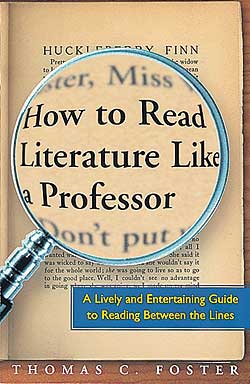
Today we talk about the introduction Foster's How to Read Literature Like a Professor.   We'll share our insights & understandings and how Gibson's ideas connect to our past experiences.


Design
We will also post our design models of the classroom and plot our thinking on what changes should be made and how we can get those changes to happen.
Community
We will take time to discuss our norms as a class, the habits of culture in the room that each of us really need to be successful.  For example, I need a space where it's okay to be raggedy -- to express half-ideas, not quite formed thoughts, almost there notions, and to then be able to say, "You know what? I wasn't quite on with that."    

What are your particular needs?
Producing & Sharing
But we'll start the day with another round of sharing our summer projects.  Four more folks will share their thinking, ideas, and products.  


Homework

Read: Ender's Game (1-100)
Prepare to Discuss: To what extent does EG qualify as "Literature?" 

Read: "Thinking About Literature" packet
Complete: One of the activities based on the poetry & short stories embedded in the packet.  This is another benchmarking piece for me.  I'm looking to see what you choose, the quality of the work you produce.

Tuesday, September 3, 2013

AP Lit: Designing, Guiding, Expecting, Sharing, Uniting, Ending

A tremendous amount to accomplish in a very short amount of time, these first two classes of the week.

Essential Question: Why Study Literature?

Sub EQ's:

  • How do we define literature?
  • How do we study literature?
  • How can our space help us to better understand literature?

I will hand you a selection from How to Read Like a Professor that you are to close read and be prepared to apply and discuss next class.


Design
We'll start with the continuance of our design project by completing the Four Compass Points interview process.  During the interview, you will learn about your fellow classmates and what needs they have for this space as a place to study and understand literature, as well as problem solve, collaborate, and enjoy themselves.  This interview, along with your other observations and the ideas upon the walls, will inform the design work you will complete for homework: a diagram/model of the room as you believe it would best function.


Guidelines & Expectations
From here we will take some time to discuss the course guidelines & expectations.  You receive so much of this material in the first week of school, I prefer to save it for the second.  
Preview of Our Guidelines & Expectation


During this session we'll also talk about class norms: the behaviors and understandings we each need from one another in order to function well as a problem solving team.  I like to think of it as "How We Roll . . ."

Sharing Projects
Another round of summer project sharing.  I'll be asking folks to get ready for this during our Guidelines & Expectations conversation.  We can multitask like that, right?


Uniting Great Expectations & Empire Falls
I've begun assessing summer essays and I thought it might be helpful to the revision process if we explored some of the connections between these two works.   


Ender's Game
Today I assign the first one hundred pages of Ender's Game to be read for the first class of next week. We'll sign those out of the library to end class today.  This title is going to be our chief point of discourse around our essential question.  


H/W
Read: Ender's Game page 1-100 - Due 1st Class of Next Week (9th/10th)
Close Read: Intro to How to Read Like a Professor - Due Next Class (5th/6th)
Close Reading includes annotations: what you notice, questions you have, connections you can make
Design: Map/Visual of the classroom as you believe it would best suit the classes' needs - Due Next Class (5th/6th)