Tuesday, October 13, 2015

Humanities 2BG: Completing the Cardboard Challenge and This Week's Creative Blog Post

We're going to complete the Cardboard Challenge this week with an exhibition of our work and a reflective piece of writing.

We also have Roots Quiz 2 on Thursday  Several folks seemed to have trouble submitting Roots Quiz 1, so those folks will need to take a retake of that one as well.

But first, Wednesday, we will put up our Cardboard Challenges.

Thursday you have a day to start your one-page reflection essay on the Cardboard Challenge.  It is due on Friday.

You have three options to choose from for your essay.

Option A. Product/Process/Outcome.  
  • Describe what you made using specific, meaningful details.
  • Describe how you made it by sharing specific step by step directions in what it took to make it.
  • Describe how you feel about the final results by discussing what you like about your final product and what you might do differently next time or on a different iteration.

Option B.  Yourself/Others/Creativity.
  • Discuss what you learned about yourself from completing the cardboard challenge, including things you didn't realize about your abilities and talents, struggles and strengths.  
  • Discuss what you learned about others as a result of completing the cardboard challenge, including the experience of interviewing others and their needs or perhaps what it is like to work with a partner.
  • Discuss what you've learned about the creative process and what it is like to make something for others and to make it using only a particular set of resources.

Option C.  Three Things You've Learned About Creativity
  • Discuss three things you've learned about creativity from completing the cardboard challenge.
For this essay, I want you to keep it within a one-page limit, 11 or 12 point font, single spaced.  (Don't play around with the fonts to make it seem like you wrote more than you did.  That's not the point.  Also: super annoying.)  The point is to use specific details to get your ideas across to your reader in a short amount of space.  

Here's what I'll be assessing (grading):

Your Details (writing) How well did you use specifics to show exactly what you mean?
Your Organization (writing) How well did you use paragraphs to organize your thoughts and ideas?
Your Voice (writing) How well does your personality come through in your writing?
Your MUGS (MUGS - mechanics, usage, grammar, spelling) 
Your Timeliness (Due Friday, Oct 16 )
SHOW YOUR LEARNING.
Blog.  3+ Posts.
Critical Creativity Challenge Post. Kick Start Your Creativity.
Take a look at these examples of creative Kickstarters

Now it is your turn.  Invent a product you would pitch on Kickstarter.  What does it do?  What problem does it solve?  How much money will you be hoping to raise?  How will you spend it?  What will your stretch goals be?  Enhance your blog post by including drawings or photos, a logo, maybe even a pitch video.

Study.  Roots Quiz 2.  (Includes lists 1-2)
Optional Demonstration of  Understanding.  Roots Product 2.

Write.  Cardboard Challenge One-Page Reflection.
Due. Friday, Oct. 16.  


Pop Culture: Music & Film

Station 1.  Music Supervision and Soundtracking.

Step 1.  Choose the clip from our class folder on Google Drive for which you'd like to create a soundtrack.

Step 2.  Dig into the CD bin to experience what music supervisors go through when they are sent unknown music.

Step 3. Investigate that music to find three songs.

a) One that suits it perfectly and the intention/feeling/mood of the scene.

b) One that transforms the scene into a different intention/feeling/mood scene.

c) One that just doesn't fit.  At all.

Step 3.   Document those songs perhaps by finding them on YouTube/Vimeo or Spotify and keeping a list.

Step 4.  Read & Rose/Bud/Thorn one of these three articles.   Then explain how the insights you gained from this  article might have impacted the work you did on the activity in class.  Post your thinking and your Rose/Bud/Thorn work on your blog.

Glee. http://content.time.com/time/arts/article/0,8599,2027592,00.html

Twilight. http://www.fastcocreate.com/1679123/twilight-soundtrack-saga-why-there-will-be-no-white-wedding-for-bella-and-edward

Broad City. http://www.billboard.com/articles/business/6451150/broad-city-music-supervisor-matt-feldman


Station 2.  Music Composition and Scoring.

Step 1.  Choose the clip you'd like to score.

Step 2.  Use GarageBand, Soundation, live instrumentation, or another music generator to compose an original score for that clip.

Ennio Morricone.  http://www.theguardian.com/music/2015/jun/03/ennio-morricone-good-film-scores-replaced-by-bad-and-ugly

Best Film Scores of 2014. http://www.hitfix.com/in-contention/the-15-best-film-scores-of-2014

Michael Giacchino. How to Score a Film in 6 Lessons.  http://www.vulture.com/2013/10/michael-giacchino-how-to-score-a-movie.html#

Step 3.  Read & Rose/Bud/Thorn one of these three articles.   Then explain how the insights you gained from this  article might have impacted the work you did on the activity in class.  Post your thinking and your Rose/Bud/Thorn work on your blog.

SHOW YOUR LEARNING.

Blog: 3+ Posts
Critical Creativity Options.
Option 1.  Soundtrack a Clip. Choose a clip from MovieClips.com or use one from our class folder and link/embed a song that suits it, a song that transforms it, and a song that's completely inappropriate for it.  Explain your thinking.

Option 2.  Score a clip.  Choose a clip from MovieClips.com or use one from our class folder and use Garageband, Soundation, live instrumentation/vocals, or another tool to design a score.  Explain your thinking.

Option 3.  Six Shot Story.  Tell a complete story using six different camera angles.  You may choose to create this as a video or as a storyboard.

REQUIRED BLOG POST.  Rose. Bud. Thorn. Read One of the Articles Above and Complete a Rose/Bud/Thorn Graphic Organizer over that article.  Post the results of your thinking on your blog.

Grades And Flight307: It's All About the Evidence

Hi folks,

This post is intended to be a reference for you to use when looking at your grades posted on PowerSchool.  I'm hoping it helps you understand the difference between MODE (the most frequent score & reliable trend) and MEAN (the average score) and why I use a combination of the two to determine your grades.

Here are a few key points to keep in mind.

KEY POINTS ABOUT GRADING IN FLIGHT 307.

1. EVERYTHING IS EVIDENCE.  Every activity we do in class, every graphic organizer you complete, every project, every blog post, every quiz, every paper.  It is all evidence of your learning, which means everything counts.

When I assess your achievement of a standard, it is based on the evidence you provide me.  Provide me piles of evidence and I can make a much better, much more accurate assessment of your understanding.  Complete most of the blog posts and show your classwork.   Complete the writing and media projects and revise them.

At the same time, if you don't provide me with very much evidence, I have to make an assessment based only on what I have.  You may be a fantastic writer and an excellent reader -- what evidence have you given me to show this is the case?  Only one blog post out of fourteen?  Only a rough draft of a paper?  If that's what you give me, that's what I have to use to make my professional judgement.

2.  YOU CAN SUBMIT WORK ALL QUARTER LONG.  I will accept evidence of your learning all the way up until the last day of the quarter.  (And sometimes even beyond that date depending on the circumstances and if you communicate with me.)

3. EVERYTHING IS REVISABLE/RETAKABLE.   Don't do well on a quiz?  Show me evidence of studying and I'll gladly provide another opportunity for you to demonstrate your knowledge.  Don't do great on an essay?  Revise it based on the feedback I've provided.  Complete a revision submission form so that I know exactly how you've developed this new draft. Same goes for projects.

4. WHAT'S THE STORY?  The whole point of grades to tell the story of how much you know.  (At least, that's how I see grades.) I want to tell the most accurate story possible and in order to do that, I need your evidence.  And I also need to know the story behind that evidence.  Was it your best effort?  When did you complete it?  What was going on at the time?  Is it really that you didn't try or was it that other things were going on that made that work unreliable evidence?  Communicate with me and help me tell your story.

Those are the three most important things to know.  Now . . . here's how the math works.

MODE VS AVERAGING.


MODE.  Mode is the most frequent number that shows up in a set of numbers.

MEAN.  Mean is the average of the numbers in a set of numbers.  (Add 'em up, divide.)

Most of you have experience averages as the way of determining your grades.  I have to use averaging as well, but not until I've used mode.  Here's why.

If you look at Student A above, you can see the scores on his . . . oh . . . reading standard for the 1st quarter.  He didn't meet the standard on the first assessment, exceeded on the following three, and then didn't do the last one.

If I were using MEAN, averaging, he'd end up with a 73, Meets/Partially Meets.  This feels weird to me.

Here's the thing.  If I'm assigning meaningful reading assessments and this student has exceeded the standard three times?  Then that student likely knows how to read and thinking about reading in the ways that I need to assess.  In fact, if he has exceeded the standard three times?  That seems like pretty strong evidence that student is at least meeting the standard, and likely exceeding it.

I have to take a look at what exactly those assessments were and consider them. That zero?  Maybe it was a relative minor reading assessment? A blog post.  A graphic organizer.  Or perhaps it was part of a major project?  I have to think about these things when I assess your abilities.

And that's why I don't put zeroes in the book and I don't average them.  It leads to inaccurate stories.

If I use the MODE, however, then I see the most frequent score is a 100 and that tells me you are nailing it.  At least thats what the evidence suggests.

Sometimes, the average is accurate.  Student B shows that.  

And sometimes the story is more complicated as with Student C, who seemed to struggle at the beginning and then had one really strong assessment score and then lost it again.  If I were to average, that student would have a 75, meets/partially meets.

But that doesn't seem accurate as a story of the student's learning.  Most of the time the student struggled.  It was only a couple of times things seemed to click -- click in a big way -- but it didn't happen consistently.

I'm always going to use the evidence available to me to determine the most accurate reporting of your understanding and achievement.

WHEN YOU LOOK IN POWERSCHOOL.  

When you load up your grades in PowerSchool you will see the only grades that "count" are the standards grades listed as due on the last day of the quarter.  These grades will go up and down over the quarter based on the evidence you provide me.

Where's that evidence?  It is all of the other assignments in the grade book: blog posts, written assessments, projects, vocab and such.  This also includes Habits of Mind.

Those individual assignments are all grayed out because if I don't put them in as "doesn't count," then PowerSchool will automatically average them.  And we know how I feel about averaging.   Instead what I have to do at various times over the quarter, is take a look at the evidence, figure out the MODE, and put that mode into the Standard Grade for the quarter.   Again, the may go up and down depending on the evidence provided.  Change the trend.  Change your grade.

Unfortunately, I have to average all of the standards grades together to get your quarter grade.  It pains me to have to do it and I don't have a choice until the school changes how it reports your learning.  (And that will be happening eventually, just not in 2015-2016.  It is part of the movement toward Proficiency Based Education and it has the chance to increase fairness and opportunity in our school in huge ways.)

SO WHAT?

So what does all of this mean?  Do your work.  Provide me the most accurate story of your knowledge and abilities.  

Having a bad night? Rough weekend?  That's okay.  If it's a minor assignment and you've provided lots of other evidence of learning, you may choose not to do it.   It won't hurt you.  Turn it in several weeks late?  That's okay.  You will be held accountable for the timeliness on Habits of Mind and can still fully demonstrate your learning for the other standards.

What if you don't provide enough evidence for me to see you have met the standards?  That has consequences as well.  I need to be able to see a trend in the data.

I know this is a lot of words.  I just wanted you to always have an explanation you can review, that you can share with your folks.

Most important things you can do?  Provide evidence.  Communicate with me.  


Monday, October 5, 2015

Pop Culture: How Might We Design a Better Music Experience?


Today, we are going to run a 20 minute design flashlab.  How might we design a better listening device?

We'll use DEEP design thinking to do this.

Discovery.  We'll start with making a list of all the devices we use to listen to music 1 min.

Empathy.  We'll make a massive bug list of what annoys about our listening devices. See what we like, dislike.  5 min.

Experiment. We'll dig into the maker cart and come up with prototypes for better listening devices.  They may be tiny.  They may be massive.  10 min.

Produce.  We'll share and quickly get some feedback.  4 min.

Consider building something like this for your project due this week.

Then you will have time to work on your projects, blogging, Pinterest and more.


Blog. 3+ Posts.
Curate.  1 Pinterest Pin.
Required Critical Creativity Blog Post Options.
Option 1. (From my friend Amy Burvall)   Analog Remix Found Poetry: Developed by David Theriault (another friend of mine) who has an excellent blog post/lesson plan about this with ideas for all disciplines. You can create the Burrough effect by laying two poems or lyrics or any text next to each other (he even suggests chapters from a textbook) and manually creating the found poem using a variety of techniques (“blackout poetry” is always a good choice, but you can get more fancy).

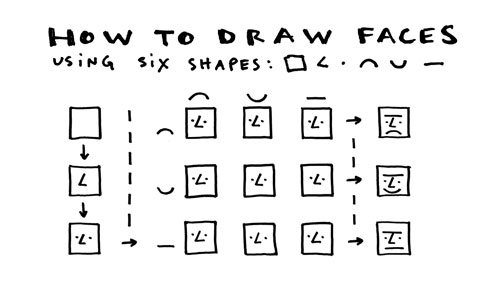
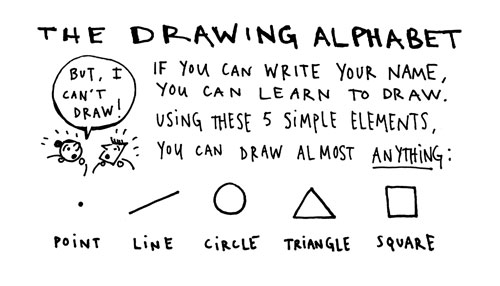
Option 2. Sketchnote the lyrics to a favorite song of yours. What are sketchnotes?

Option 3. Create a YouDubber that takes a current news story and puts a song on top of the footage for a an intentional effect. Explain your thinking.

Design & Submit. Music Culture Projects.  
Due. Wednesday. 10.7.15.
We start our film unit on Wednesday with a nice bridge: film score composition, sound tracking and music supervision.

Sunday, October 4, 2015

AP Lit: Last of True Grit, Opening of Our Work with J. Alfred Prufrock

This Monday and Tuesday, will be putting a bookmark in our work with True Grit.  We will inevitably come back to Portis and his work because that's how this class works -- building connections, finding patterns, reading and re-reading, uncovering layers and intentions.

Verse 15.
We'll open with a Verse 15.  Trying to name what I want us to be doing each class, opening with a cold reading and a close reading and annotation.  Verse on days we've been focused on prose.  Prose on the days we've been focusing on verse.

So today, thanks to my friends on the #aplitchat Twitter chat (click on it -- it's a real thing and they are neat folks) we'll be looking at Barbara Crooker's "And Now It's October" via The Writer's Almanac.

15 mins.  We're going to hold ourselves to that.  We can always continue the discussion . . . on the blogs.

Elements of Fiction & Sketchnoting.

Extending from our work with the LEGO metaphors, we'll identify the key elements of fiction & determine Portis' development of each in True Grit.

We will use this as the basis for our first intentional work with sketchnoting as I will show you techniques for turning doodles into ideas and ideas into pre-writing.

I may have posted this list before, but here are a few resources around sketchnoting you may find helpful.

Here are a few resources to help:

First Time Sketchnotes on Sketchnote Army

Sunni Brown's Doodle Revolution 

And...


Show Your Learning.

Blog. 3+ Posts.
Req'd Critical Creativity Challenge. Sketchnote T.S. Eliot's "The Lovesong of J. Alfred Prufrock"  Document your process as you go.  Simple as that.  
Due. Friday. 10.9.15.

Read, Annotate & Literary 3x3.  Eliot's "Prufrock." 
Due. Next Class.

Study. Vocab Quiz 1.
Next Class.  We keep pushing it back because I keep forgetting to remind you.
See the link to the list on the right hand side of this blog.
Expect a Quiz a Week for the Rest of the Month.
Don't Quiz Well?  Retake as Many Times As You Like.
Or. Create a roots-based product to demonstrate your knowledge.
It's all about evidence.

Revise. Synthesis 1. 
Due. ASAP.  Revise as many times as you like.
Final Revision Due. Monday. Oct. 27.  


Wednesday, September 30, 2015

Pop Culture 3B: Country v Hip-Hop, Music & Politics

Today you will be rotating through two experiences to explore the presence of politics in music as well as the relationship between country music and hip-hop.

Most of the resources you need are here on this blog post and there will be tools at each station to help you better build your understanding.

Here are the two key playlists.  The graphic organizers you need are here and here.

Country vs. Hip-Hop


Music and Politics

Show Your Learning.


Music Culture Project Rubric.  
Project Due. Wednesday.  Oct. 7th.


Blog. 3+ Posts.
Due. Friday. 10.2.15.
Pinterest.  1 Post.
Due.  Friday. 10.2.15.
Here are three options for creative blog posts for the week:

1. Musical Roots.  Choose a band or artist and create a map of that band's musical influences back at least three layers deep.  Explain your thinking and post links/embed content that shows evidence of your thinking.  Use our work from last week and today to inform this. 

2. Create a Beat for the News.  Use Beatlab.com, Garage Band or another beat generator to create a beat to be played while a news story (from this week) is being viewed, heard, or read.  Post the link to the news story, embed/link to the beats, and explain your thinking.

3. Musical Color Palette.  Use Colourlovers.com to create a color palette for your musical tastes.  Name each color and explain its association to the music to which you connect.  For example, I might create an off-white color & call it "Middle School Hip-Hop Mindset" when the depth of my hip-hop knowledge went to Beastie Boys, Vanilla Ice (yup), and 3rd Bass with a little Fresh Prince and Rob Base on top of that. 

Any of the the above could be expanded upon and further developed into your Musical Culture project due next week.  Consider this a way to build a first iteration or prototype for your finished project due next Wednesday, Oct. 7.


Eng 9. Playlist for Other Rubric and How to Post Your Links on Blog Tracker.

Hi folks,

I thought this rubric was shared with you on a previous post and it was not.  I'm apologizing for that now.  It is the same criteria as what we put up on the whiteboard in the room -- it is just more descriptive and provides more feedback.

Reminder, part of the project was to create a piece of "cover art" for your partner's playlist.

Turning in Your Blogs.

Here's a brief video to help you turn in your blog posts properly on the blog tracker.  I take you step by step.  By Friday, you should have nine posts up, including your Playlist for Others, ideas/designs/process for your Cardboard Challenge, and a 5 Card Flickr that tells the story of solving a problem.  (These have all been described in earlier posts.)


What else could you blog about?  Here are some ideas:


  • Oreo Challenge. Manilla Folder Challenge.  Lego Challenge.
  • Any and all of the graphic organizers so far with an explanation explaining what it is and your thinking.
  • Any draft or planning or sketchnoting or doodling so far with an explanation of your thinking.
  • Your Thirty Circles.
  • Poetry.  Creative Writing. Reflections. Things You are Seeing that Make You Think. 
  • Comments and Critiques and Dialogues
  • Videos That You Want to Talk About.
  • Music That You Want to Talk About.
  • Memes That Make You Think and Laugh And Think.
  • Articles That Make You Think.
  • Post-Its and sorts with explanations.  
  • Anything at all that shows your thinking.  Any of the work you do for class that shows your thinking.  

Here are a couple of links to sample blog posts you could use as guides.  These show you the sort of thinking and explanations that should be included.  These are not perfect posts -- these are good examples to help you see what meets the standard for thinking and content.


Also, here's a video showing some of our problem sorting thinking from class today.  Really cool work today everyone.


Show Your Learning.

Blog: 3+ Posts 
Creative Blog Post. #ShowYourWork on Your Global Cardboard Challenge design.
Sketches. Doodles. Maps.  Lists. Ideas.  Mini Makes. (Manila folder challenges) 
Due. Friday. 10.2.15 

Study. Roots Quiz #1  FRIDAY. (We should have taken this last week.)
Use the Quizlet to Help You Study.
Know the Root & What It Means.
Other Evidence of Learning:  In addition to the taking the quiz, you may want to create a roots product that demonstrates your understanding of the roots and what they mean.  Some of us struggle with quizzes as a way of proving we know something, but if we get a chance to use our knowledge, we knock it out of the park.  Consider writing a story, a set of instructions, making a video, recording a podcast, building something on Minecraft or in LEGO, recording a song, drawing a comic strip, or some other way of showing me that you know those roots and what they mean in a way that shows you truly understand. 
Due.  Friday. 10.2.15